
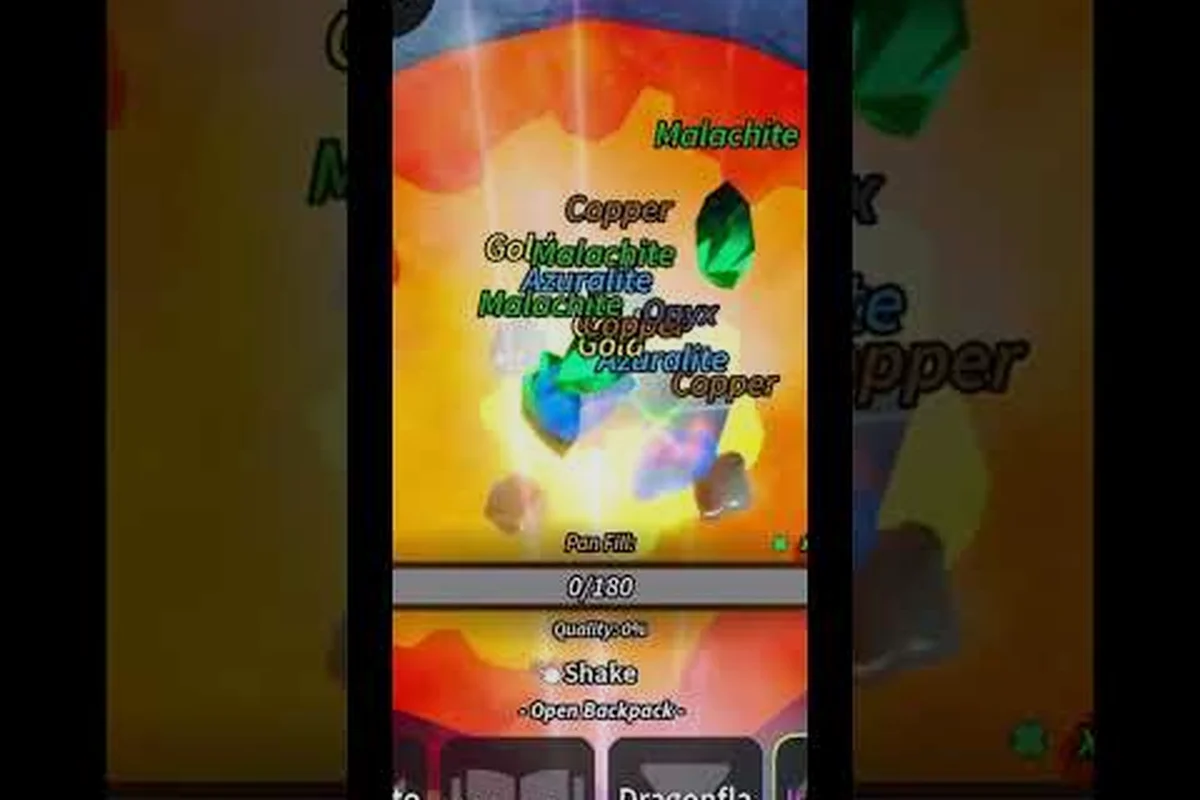
Build early game capital with this Prospecting common minerals guide, covering spawn rates, sell values, and crafting uses for starter ores like Iron and Copper.
Understanding Prospecting Common Minerals and How the Collection Works
Every player who boots up Prospecting starts with a basic pan, a starter shovel, and a slot in their Collection journal. That journal is the backbone of the entire mineral economy because every rock you pull from a riverbed or hillside gets logged there the moment you identify it. According to the Minerals List, minerals can be obtained by digging in the right deposits, and each one can later be sold at a Merchant for cash. The wiki also notes that minerals come in different rarities and are tied to specific deposits, which is why two players standing next to each other in the same river can pull completely different rocks from the same shovel of sediment.
Understanding the Collection system is the first step toward making serious money. The official Prospecting game page on Roblox describes the core loop simply: dig sediment, pan it, and sell what you find. However, what the marketing copy does not mention is that every new mineral you log into your Collection rewards you with a bonus gem payout. The Minerals List confirms that discovering a brand new entry in the journal grants a set gem amount, which means collectors who explore widely actually earn more than miners who camp one location. This is why diversifying across multiple minerals — including pyrite, gold ore, copper ore, platinum ore, and silver ore — pays off more than grinding a single spot.
Mineral values in this game are quoted in dollars per kilogram, and every entry in your inventory shows its current weight. The base prices, as reported on the community wiki, place pyrite at the bottom of the ladder at $500/kg while platinum sits at $2,000/kg and gold at $1,000/kg. That price spread matters because the difference between a 1-in-8 drop and a 1-in-2 drop is what determines whether your panning session feels profitable or empty. Most players who skip the Collection bonuses end up wondering why their income plateaus, so treating prospecting common minerals as a journal-completion project first and a money grind second is the smarter long-term play.
Mineral Values, Rarities, and Drop Rates at a Glance
Before you chase any specific rock, you need a clear sense of which minerals are worth your time and which ones are basically vendor trash that just happens to fill your journal. The table below pulls together the base sell prices and the most generous drop location for each of the five core minerals covered in this guide. Drop chances come from the Prospecting wiki entries and are accurate as of the most recent community verification.
| Mineral | Sell Price (per kg) | Rarity Tier | Best Known Drop Location | Approximate Chance |
|---|---|---|---|---|
| Pyrite | $500 | Common | Entry-level riverbed | ~1 in 8 (13.17%) |
| Copper Ore | Low (vendor tier) | Common | Starter sediment zones | High frequency |
| Gold Ore | $1,000 | Uncommon | Mid-tier rivers and hills | ~1 in 2 (top spots) |
| Silver Ore | Mid (between copper and gold) | Uncommon | Mixed river deposits | Moderate frequency |
| Platinum Ore | $2,000 | Rare | Upper-tier and special locations | ~1 in 3 (best spots) |
The price column reflects what each mineral is worth when sold raw to a Merchant without any recipe conversion. If you are just looking to clear inventory and bankroll your next shovel upgrade, raw sales are the fastest path. However, if you are sitting on a stockpile of platinum and some matching gems, you can craft pieces like the Amethyst Pendant (8 platinum + 2 amethyst) or the Ruby Ring (5 platinum + 1 ruby) for collection milestones, as documented on the Rare Minerals Guide. The same wiki page notes that platinum is actually rarer on Earth than gold, which the game mirrors by giving it a higher sell price.
Gold occupies the middle of the value ladder at $1,000/kg, but it pulls double duty because it is also a recipe ingredient. The Minerals List lists the Gold Ring (5x gold), the Garden Glove (5x gold + 1 titanium + 5 pyrite), and the Lapis Armband (4x gold + lapis) as craftable items, meaning raw gold sales are not always the best move. Pyrite, by contrast, is almost always better sold raw because its only known recipe use is also a Garden Glove, and that recipe demands five pyrite alongside other materials that may be more valuable. For the bulk of players, prospecting pyrite is a volume play: low price per kilo, but high drop frequency at starter deposits.
Where to Find Each Mineral: Location and Strategy Guide
Knowing the numbers is only half the battle; you also need to know where to swing your shovel. The map in Prospecting is divided into multiple river systems and dig zones, and each zone favors a different subset of minerals. The wiki's location-and-chance tables are the most reliable community source, and they are updated whenever the developer pushes a new patch that shifts drop rates. Below is a breakdown of the best farming routes for each of the five core minerals, based on what players have documented.
Gold Ore and Platinum Ore: The Mid-Game Money Makers
Gold is unusual because its best drop chances are not locked behind a single premium zone. According to the wiki, multiple deposits in the mid-tier range offer gold at roughly a 1-in-2 chance, with percentages ranging from 65.84% at the best location down to 33.46% at less efficient spots. That means you do not necessarily need to travel to the most expensive area to fill your inventory; you just need to find a river whose deposit list includes gold in the top three slots and stick to it.
Platinum, on the other hand, is more selective. The Platinum wiki page lists three confirmed drop locations, with the best two sitting at around 30.89% and 28.70% — essentially 1-in-3 odds. The third confirmed location drops to roughly 13.17% (1 in 8), which is significantly worse and only worth visiting when the better zones are crowded. Because platinum sells for double the price of gold, the effective gold-per-hour at a 1-in-3 platinum spot is comparable to a 1-in-2 gold spot, so experienced miners often alternate between the two rather than camping a single resource.
Pyrite, Copper Ore, and Silver Ore: The Starter Economy
Prospecting pyrite is where every new player cuts their teeth. Its best documented drop chance is 13.17% (about 1 in 8) at the most generous location, but that is misleading because pyrite appears in many starter zones where the alternative is no mineral at all. The wiki explicitly describes pyrite as having the lowest value of any mineral, but it remains a critical recipe ingredient for the Garden Glove, so it never becomes truly useless. New players should treat pyrite as a guaranteed vendor sale until they have enough surplus to consider crafting.
Copper ore sits in a similar role on the starter ladder. While the wiki does not list copper at the same level of detail as gold or platinum, the community generally treats it as a low-value, high-frequency find in the earliest zones. Its main job is to keep new players' wallets from going completely empty between rare drops. Silver ore fills the middle slot, selling for more than copper but less than gold, and it tends to appear in mixed river deposits alongside gold. If you are already farming gold, you will pull silver naturally as a byproduct, which makes it a low-effort addition to any session.
Selling, Crafting, and Getting the Most Out of Your Haul
Once your inventory is full and your pan is empty, the question becomes what to do with everything you have collected. Most players head straight to the nearest Merchant and dump their entire inventory for raw cash. That is the right move for pyrite, copper, and any minerals you have no plans to craft with. But for gold, platinum, and silver, there is a real decision to make: sell now for liquid currency, or hold the stock and convert it into a recipe.
The table below summarizes the practical choice for each mineral based on its current wiki-documented uses.
| Mineral | Recommended Action | Why |
|---|---|---|
| Pyrite | Sell raw unless crafting Garden Glove | Recipe demands 5 pyrite plus titanium and gold, all of which are worth more than the finished item in most cases |
| Copper Ore | Sell raw | No high-value recipes documented; vendor cash is the best return |
| Silver Ore | Sell raw for most players | Acts as a byproduct of gold farming; converting to items is rarely worth the inventory slot |
| Gold Ore | Hold 5+ for Gold Ring or Garden Glove | Rings and gloves unlock Collection milestones and gem payouts |
| Platinum Ore | Hold 8+ for Amethyst Pendant, 5+ for Ruby Ring | Recipes are tied to Collection bonuses and gem rewards that exceed raw sale value |
The Collection bonus is the real driver behind the hold-versus-sell decision. Each new recipe you complete for the first time can unlock a journal entry, and that entry is what pays out the gem stipend mentioned on the updated Minerals page. Gems are the soft currency used for cosmetics, premium shovels, and other upgrades that cash cannot directly buy, so a single new recipe completion can be worth more than a full session of raw mineral sales.
If you are still learning how to maximize the actual panning process itself, the How to Pan for Gold breaks down the timing and technique that experienced players use to squeeze every last flake from a pan of sediment. Pairing that technique with the mineral priorities above is the fastest way to climb from starter-zone income to mid-game wealth.
Putting It All Together: A Practical Farming Plan
Theory only takes you so far. What most new players need is a concrete plan they can execute the moment they log in. Below is a four-step routine that combines the location data, the price ladder, and the Collection bonus system into a single repeatable loop. It is designed for solo players who do not want to chase group-only zones and who would rather build a steady income than gamble on rare drops.
| Step | Action | Trigger / Threshold | Expected Income (per run) | Key Tip |
|---|---|---|---|---|
| 1 | Pan starter zone (pyrite + copper) | Reach 10 kg of each | Liquidity from low-tier vendor sales | Sell immediately at first Merchant (instant payout) |
| 2 | Move to best gold/platinum zone for gear tier | Starter pan → 1-in-2 gold zones; mid-tier pan → platinum at $2,000/kg | Volume sells on gold; premium on platinum | Match pan tier to drop odds before chasing value |
| 3 | Check Collection journal | Every new mineral logged | Automatic gem payout on first discovery | Diversify across pyrite, gold ore, copper ore, platinum ore, silver ore |
| 4 | Review gold (≥5) or platinum (≥8) inventory | Hold threshold met | Crafting bonuses via Gold Ring / Amethyst Pendant / Ruby Ring | Hold for crafting window instead of raw selling |
-
Start the session at your highest-unlocked starter zone and pan until your pyrite and copper stocks each reach at least 10 kg. This is your liquidity reserve; sell both batches at the first Merchant you pass and bank the cash. The vendor sell happens instantly, so there is no reason to hold low-tier minerals.
-
Travel to the best documented gold or platinum location based on your current gear tier. If you are still using a starter pan, prioritize the gold zones with 1-in-2 drop rates because volume matters more than per-unit price. If you have upgraded to a mid-tier pan with luck bonuses, switch to platinum because the 1-in-3 odds are more than offset by the $2,000/kg sell price.
-
Watch your Collection journal after every successful find. When you log a brand new mineral, the gem payout happens automatically the first time you discover it. Do not ignore the journal; it is essentially a hidden paycheck that runs alongside your vendor sales, and it is the single biggest reason to diversify across pyrite, gold ore, copper ore, platinum ore, and silver ore instead of farming one rock.
-
End the session by reviewing your gold and platinum counts. If you have at least five gold or eight platinum sitting in your inventory, consider holding them for the next crafting window instead of selling. Recipes like the Gold Ring, Amethyst Pendant, and Ruby Ring pay out Collection bonuses that raw sales do not, and over time those bonuses add up to a second income stream that most casual miners never unlock.
This loop is intentionally simple because the biggest mistake new players make is overcomplicating their route. The economy rewards consistency more than it rewards optimization, and a player who runs the same four-step cycle for an hour will almost always out-earn a player who chases every rumored rare spawn they see in chat.
For more strategies and details, explore our Geodes Guide.
Frequently Asked Questions
What is the most valuable mineral to farm in Prospecting?
Platinum is the most valuable standard mineral at $2,000/kg, but it is rarer than gold. For raw cash-per-hour, gold at a 1-in-2 drop zone is often more efficient, while platinum wins when you have a mid-tier pan with luck bonuses.
Should I sell pyrite or save it for crafting?
Sell pyrite raw unless you are actively building the Garden Glove, which requires 5 pyrite plus 1 titanium and 5 gold. Because the other ingredients are more valuable than the finished item in most cases, the recipe is mainly worth doing for the Collection bonus rather than the sell price.
Where do I find copper ore and silver ore?
Both appear in starter and mid-tier river deposits, often as byproducts of gold farming. You do not need a special location; simply panning in the same zones that produce gold will fill your copper and silver stocks naturally over a normal session.
How does the Collection journal work?
Every mineral you identify for the first time gets logged into your Collection, and logging a new entry pays out a set gem amount. The system is documented on the Minerals wiki and is the main reason diversifying across prospecting common minerals pays off compared to grinding a single rock.
Do mineral prices ever change?
According to community data, sell prices per kilogram have remained stable across recent patches, but drop locations and chances are adjusted whenever the developer updates the map. The wiki is updated after each major patch, so it is the most reliable place to confirm current drop rates before you commit to a long farming session.